
 ไทย
ไทย English
 中文
中文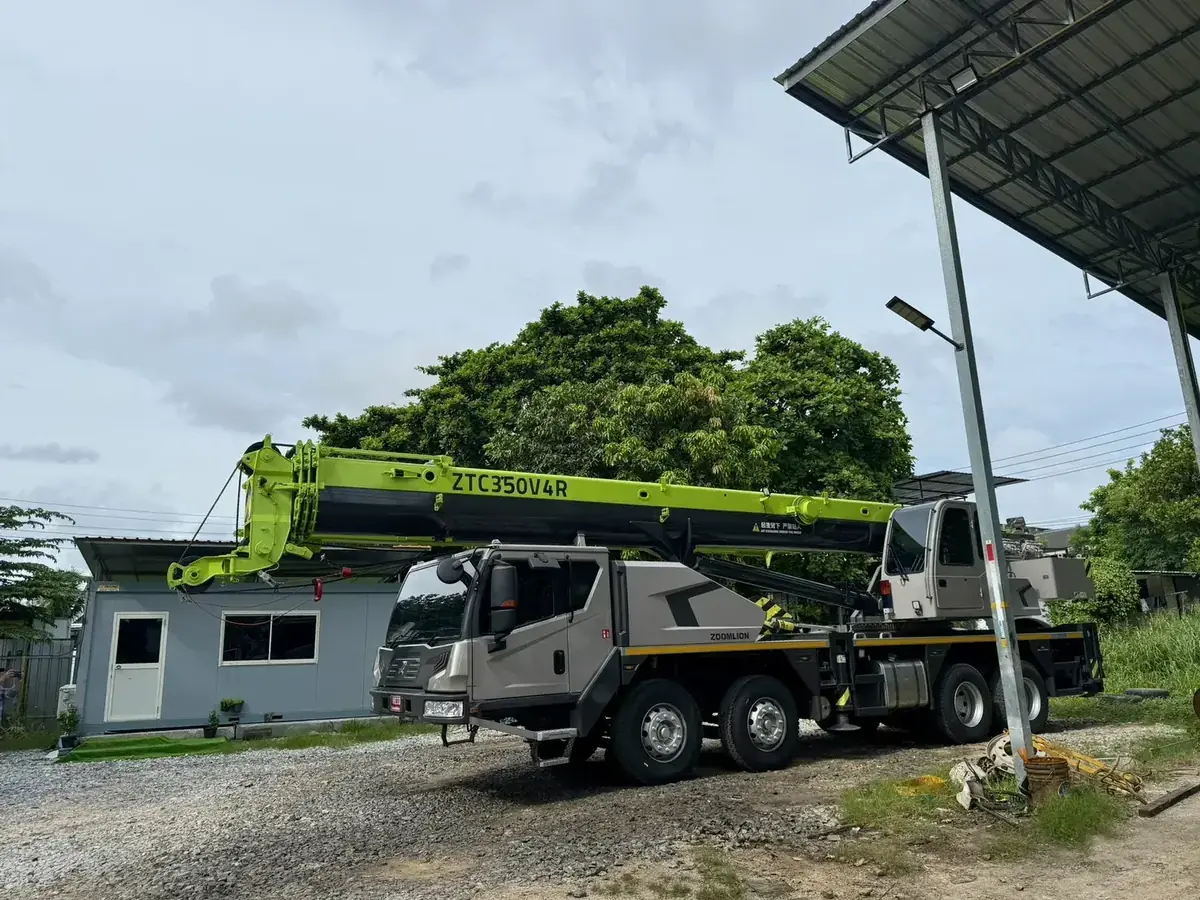
Many times customers call to ask about crane rental prices but don't have much site information, making it difficult to estimate and requiring multiple calls. If you prepare the information from the checklist below before calling our crane rental service, communication will be much easier, you'll get the right crane for the job, accurate pricing, and on-time completion — whether your site is in Chonburi, Rayong, Chachoengsao, or anywhere in Eastern Thailand.
Why Is Preparing Information Important?
Renting a crane is not like renting a regular vehicle — each crane size has different capabilities. Crane rental prices depend on many factors. If the service provider receives complete information from the start, they can:
- Select the right crane size for the job — not too large (wasting money) or too small (unable to lift)
- Provide accurate pricing — no need to overestimate, keeping costs reasonable
- Plan better — prepare lifting accessories, documents, and crew in advance
- Reduce on-site time — no need to re-assess or change plans mid-job
1. Details of Items to be Lifted
Information about the load is the first thing the service provider needs to know in order to select the right crane for rent:
- Type of item to be lifted — machinery, containers, steel structures, prefab houses, transformers, water tanks, etc.
- Approximate weight — a nameplate or manufacturer specs would be very helpful; otherwise, a rough estimate is fine
- Dimensions (W x L x H) — this helps select lifting accessories such as spreader bars, slings, or beams
- Lifting points — does the load have hooks, eyes, or designated lifting points? If not, additional rigging equipment is needed
- Number of pieces — how many pieces need to be lifted, to estimate total working time
2. Crane Parking Position and Placement Point
Site area information directly affects crane size selection and lift planning:
- Crane parking spot — where can the crane park? Is the surface concrete, compacted soil, or landfill? Soft ground may require steel mats
- Distance from parking to placement point — how many meters? This is crucial as it affects the crane size needed — the farther, the higher the tonnage required
- Outrigger space — every crane must deploy outriggers to bear the load; there must be enough space, e.g., a 25-ton crane needs about 5-6 meters
- Site access road — how wide is the road? Are there sharp turns? Large cranes require roads at least 4-6 meters wide
- Ground conditions — if the ground is newly filled or soft, additional steel load-bearing plates may be needed
3. Obstacles and Site Limitations
Obstacles affect safety and the choice of lifting method:
- High/low voltage power lines — do they cross the work area? If so, coordination with the power authority to cut power is required
- Roof structures, trees, adjacent buildings — these affect boom angle and lifting direction
- Lifting over walls or structures — extra height and boom reach must be factored in
- Chemical pipes / steam pipes — commonly found in factory and industrial estate work, requiring special caution
- Noise restrictions — some areas prohibit nighttime work or have noise limitations
4. Date, Time, and Site Requirements
- Date and time — when do you need the service? Holiday or nighttime work may incur additional charges
- Type of location — factory, industrial estate, government facility, or general construction site — each has different entry procedures
- Required documents — most industrial estates require a PJ.2 certificate, operator license, insurance, and a lifting plan before entry
- Required PPE — hard hat, safety glasses, reflective vest, safety shoes; some factories also require a gas detector
- Working duration — estimated hours needed, to assess service cost and schedule the crane
5. Job Site Photos — The Most Helpful Information
If you're unsure about the numbers, taking photos of the job site is the best way to provide information to the service provider. We recommend at least 5 angles:
- The load — show the size clearly; having a person standing nearby for scale or a measuring tape is very helpful
- The placement point — show where the load needs to go and how high
- The crane parking spot — show the surrounding area
- Site access road — show the road width and turns
- Obstacles — power lines, roofs, buildings, trees that may be in the way
Also send a Google Maps pin or LINE location to the team so they can assess the distance and plan the crane's route to the site.
Checklist Summary: Information to Prepare Before Renting a Crane
| Item | Ready |
|---|---|
| Weight of the load | ☐ |
| Dimensions (W x L x H) | ☐ |
| Distance from crane position to placement point (meters) | ☐ |
| Required lifting height | ☐ |
| Obstacles (power lines, roofs, buildings) | ☐ |
| Date and time required | ☐ |
| Site type (factory / industrial estate / construction site) | ☐ |
| 3-5 site photos | ☐ |
| Google Maps location pin | ☐ |
Summary: The More Information You Prepare, the More Time and Budget You Save
Preparing complete information before calling your crane rental service provider not only ensures accurate pricing but also reduces on-site problems, shortens working time, and keeps everything on track. If you're unsure about the details, simply take photos of the job site from multiple angles and send your location via LINE or chat app to our team. We're ready to assess the crane size, working time, and provide the most suitable pricing.